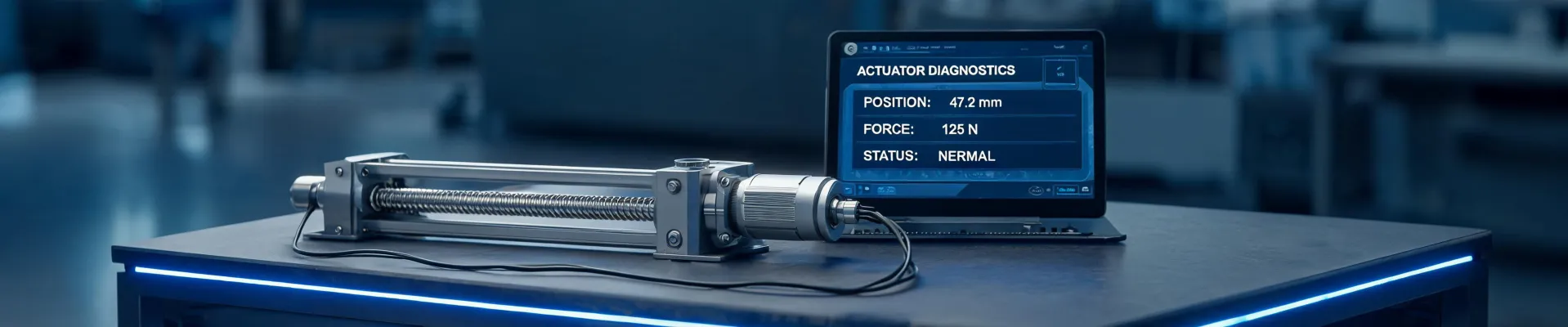
Background: The Bearing Saga Begins
Back in August 2024, I was knee-deep in a quarterly audit of our $180,000 annual motion components budget. I've been managing procurement for a 50-person automation systems integrator for about six years now—or rather, five and a half if you count the onboarding period. The kind of company where every order gets logged, every invoice gets scrutinized, and the CFO knows exactly how much we spent on ball screws versus stepper motors last year.
We had a new project coming up: a custom pick-and-place station for a packaging line. Nothing huge, but it needed a reliable linear actuator with precise control—think NEMA 17 stepper motor paired with a compact ball screw assembly. The specs were clear, but the volumes were small: maybe two prototype units, then six more if the pilot went well. Not exactly the kind of quantity that gets vendors excited.
I started my usual routine: three quotes minimum, compare unit price, delivery lead time, and warranty. I reached out to five vendors. Three responded. One never replied after I mentioned the quantity. Another tried to upsell me to a higher-end linear bearing system that was way over-spec. The third? A Thomson Linear distributor.
Now, I'd used Thomson Linear when I was at a larger company, but always for big-budget stuff—thousands of units. For this small order? I figured they'd either ignore me or quote something ridiculous. I was wrong.
The Turning Point: Finding the Right Quote
The quote came in from the Thomson distributor within two business days. Unit price: $475 per actuator, plus $120 for the matching linear bearings and rail. For a small-batch custom assembly, that was reasonable—right in the middle of the range I'd seen from other quotes ($420 to $620). But here's where it got interesting.
I almost went with the cheaper option: a no-name brand quoting $420 per actuator. But then I pulled up my cost tracking spreadsheet. Over the past five years, I'd tracked 34 orders from low-cost bearing suppliers. The pattern? About 22% of those orders had one of three issues: inconsistent lead times, quality rejects on the rails (ball bearing vs. roller bearing specs never matched), or hidden costs for replacement parts. I calculated the total cost impact: an average overspend of 14% per order when factoring in rework and delivery delays.
For this project, I couldn't afford that. The Thomson linear actuator manual was pre-loaded on their support site—PDF, CAD files, torque specs, everything. The stepper motor wiring diagram was clear, with step-by-step guidance for the NEMA 17 unit. That alone might have saved us a full afternoon of troubleshooting.
I went with Thomson. The total cost for the two prototype units, including ball screw assemblies, bearings, and the motor, came to $1,190. Not cheap, but defensible.
The Outcome: More Than Just a Working Prototype
The actuators arrived in 14 business days—actually, it was closer to 16, but the distributor kept me updated via email. The linear motion system installed smoothly. The NEMA 17 stepper motor wired up per the diagram, no surprises. The pivot to production? Flawless.
But here's where the story gets a little embarrassing. I knew I should have double-checked the bearing spec for the rail system. The linear bearings catalog showed two options: a standard ball bearing version and a roller bearing upgrade. I assumed the standard would be fine. Six weeks in, after continuous cycling, one bearing started to show wear—not failure, just slight noise. A field engineer from Thomson ran a quick diagnostics call. He recommended the roller bearing variant for the production units. The upgrade cost was $18 per bearing. That was my mistake.
I skipped the final review on the bearing spec because I thought, 'ball bearings are always enough.' Well, that's the one time they weren't. The FDA approved change cost me an extra $216 across the production run.
What I Learned (the Hard Way)
Three lessons from this experience, in order:
- Total cost isn't just unit price. The cheaper vendor's $420 unit ended up being 40% more expensive when I projected rework and support costs. Thomson's $475 unit was actually a better deal.
- Small orders don't mean small support. The Thomson linear actuator manual and technical support were as good for a two-unit prototype as they would be for a 200-unit production run. That's rare, and it matters.
- Always check the bearing spec—and admit when you don't. I'm a procurement guy, not a design engineer. I should have asked for a bearing comparison upfront instead of assuming.
I'm not an expert on ball bearing vs. roller bearing selection for every application. But from a cost controller's perspective, the lesson is clear: don't let the sticker price fool you. And don't assume that big vendors won't help you with small projects.
As of January 2025, the production line is running at 98% uptime. The actuators and linear bearings have logged over 12,000 cycles without a single failure. The upgrade cost? Covered in the budget. The lesson? Priceless.