Sustainability

Replace hydraulic motion with cleaner electric actuation where the duty cycle fits

Electric linear actuators can reduce fluid leakage, idle power demand and maintenance waste when sized around real load and duty data. The most successful conversions start with honest comparison, not a blanket promise that every cylinder should become electric.

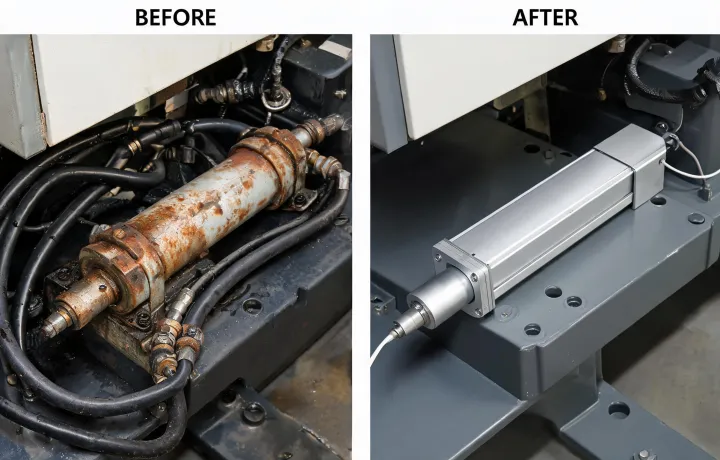
Hydraulic to electric actuator comparison

Energy and maintenance review framework

Instead of claiming every axis should be electric, the review compares operating hours, idle power, fluid service intervals, leak exposure and actuator current profile. The result is a grounded estimate that engineering and maintenance teams can challenge. A low-duty positioning axis near product, people or electronics often has a stronger case than a high-shock continuous production axis that still belongs to hydraulic power.

Hydraulic service events
Oil, seals, hoses and cleanup hours
Electric actuator checks
Current trend, position faults and duty cycle
Machine environment
Washdown, dust, shock and temperature
Payback focus
Reduced downtime and simpler maintenance
Leak risk reduction

Electric actuation removes hydraulic oil from axes positioned over packaged product, flooring, electronics or operator walkways. That can lower cleanup time, reduce slip hazards and simplify sanitation procedures in sensitive production zones.

Right-sized power

Actuators draw power during movement instead of maintaining a constantly pressurized hydraulic circuit for light intermittent duty. The review checks cycle frequency and force reserve so energy claims are tied to the actual machine behavior.

Service diagnostics

Current and position feedback help maintenance teams investigate overload or obstruction events before repeated failures create scrap. Diagnostics also make it easier to separate an actuator issue from wiring, controller or mechanical alignment faults.

Check whether your hydraulic axis is a good electric conversion candidate.

Include cycle rate, force, stroke, mounting geometry, fluid service pain points and control requirements. If you already track maintenance hours or hydraulic cleanup events, add those numbers so the review can compare total ownership effort rather than purchase price alone.