In March 2024, I had three quotes spread across my desk. We were replacing the linear guides on two packaging lines—the ones that had been running three shifts a day since 2019. The budget was tight. The CFO had said, "This quarter, everything gets challenged."
Vendor A quoted $24,600 for the full set: linear bearings, hardened steel shafts, mounting hardware, and a technical review from an applications engineer. Vendor B, a multi-line industrial supplier we'd used for years, quoted $17,200 for what they called "the same thing, comparable quality."
I almost signed Vendor B's quote on a Thursday afternoon.
I'm the procurement manager at a 340-person packaging equipment company. I've managed our components budget—about $2.3 million annually—for six years, negotiated with 70-plus vendors, and documented every order in our cost tracking system. I should have spotted the problem sooner.
The "They're All the Same" Myth
"Standard bearings, same class. Everyone uses the same steel." That's what Vendor B's sales engineer told me when I asked for load ratings and material specs.
That phrase—"everyone uses the same steel"—kept me awake that weekend. Because it was true 20 years ago, when most bearing production ran through a handful of European and Japanese plants with established metallurgy standards. Today, the market is full of generic equivalents made with recycled steel, off-spec raceways, and unverified hardening processes. The claim isn't just lazy; it's outdated.
Here's what I learned when I actually dug into how ball bearings are made: a typical deep-groove unit starts as SAE 52100 chromium steel. It gets forged, machined, heat-treated to about 60–62 HRC, then precision ground to tolerances measured in microns. The raceway surface finish—the smoothness of the track the balls roll in—can be the difference between 5,000 hours of service life and 30,000. Two bearings can look identical in a box and perform nothing alike under load.
Last year, my son's compound bow started feeling rough on the draw. I took it to a pro shop, and the technician showed me the tiny ball bearings inside the cam assembly—smaller than my pinky nail, with a tolerance measured in ten-thousandths of an inch. "A ball bearing compound bow depends on those little units," he said. "A cheap one throws off the whole draw cycle. It's a $15 part that can probably wreck a $900 bow." Same logic applies to an 18-meter packaging line, just with bigger numbers.
The $3,200 Mistake That Built My Cost Spreadsheet
Let me rewind to 2019. Before we implemented our current procurement policy, we bought "budget" linear bearings from a discount supplier to save $3,200 on a line rebuild. Nine months later, a maintenance tech pulled one out with metal flakes in the grease. The shaft had scored—the raceway hardness was below spec, and the balls had started brinelling.
We replaced the shaft, two bearing blocks, and lost 11 hours of production. That's $18,700 in lost output plus $3,100 in parts. The $3,200 we saved turned into a $21,900 mistake.
I built a TCO calculator after that. Our policy now requires load calculations and material certifications for every linear motion component we buy. No exceptions.
When I Asked for a Spec Sheet, They Went Silent
So when Vendor B said "comparable quality," I pulled up my spreadsheet and asked three questions:
- What's the dynamic load rating (C) for the LM block?
- What's the shaft hardness and surface finish (Ra)?
- Are the ball tracks ground or machined?
The sales engineer said he'd get back to me. He didn't. I called twice. On the third call, he admitted, "We don't have that spec sheet. They're from a distributor in Taiwan."
That's not a bearing supplier. What I mean is: nobody on their team understood the physics of the product they were selling. They were a box mover.
The Specialist Who Knows His Limits
That same week, I called thomson-linear directly—not our normal distributor, but their engineering support line. I explained the application: two 12-meter packaging lines, round rail guides, 40 mm shafts, a combined lateral load of about 4.8 kN per carriage, running at 0.8 m/s with an 87% duty cycle.
The applications engineer asked about operating temperature and contamination. The line runs at 32–38°C with moderate dust from the cardboard dust collectors. His response surprised me.
"For your speed and load, the standard bearing with a wiper seal is fine. Actually, if you're seeing measurable dust on the shafts, I'd spec the contact seal version. And don't let anyone upsell you to the stainless series—that's for wash-down environments, and you don't need it."
He talked me out of a more expensive product. That's the kind of behavior that earns a long-term contract.
Then I asked about the servo actuator on the adjacent line—the one with a brushless motor driving the infeed conveyor. We'd seen positioning drift on the carriage return. He said:
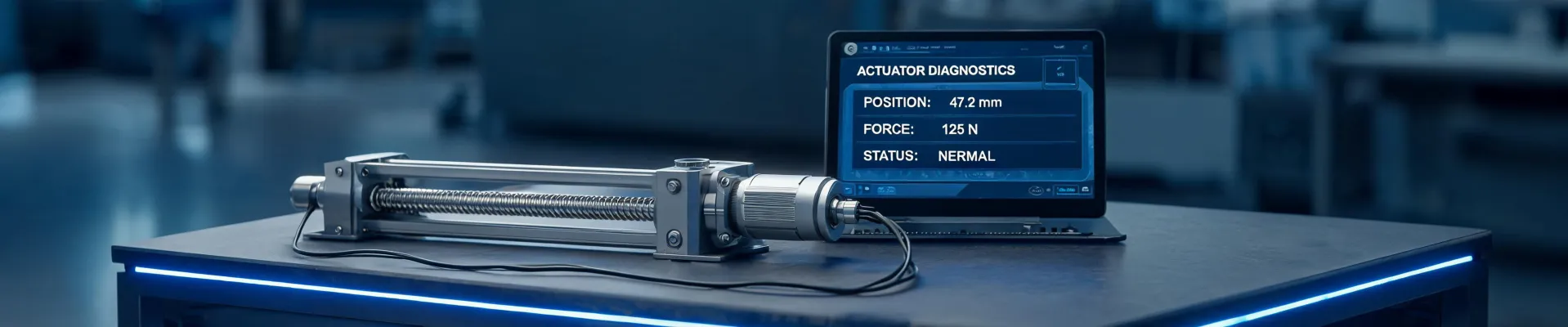
"That's not my area. We make the actuator, but if the drift is showing up in the brushless motor drive, you need the motor vendor to check the resolver feedback. I can help you isolate the mechanical side, but the electrical diagnosis is beyond my expertise. Before you call a repair shop, here's exactly how to detach the coupling so you don't damage it during testing."
The vendor who said "this isn't my strength—here's who you should call" earned our entire motion control budget for the next five years. A generalist—or a salesperson with a quota—would have said yes, sent a service tech, and billed us for the discovery.
To be fair, Vendor B wasn't trying to sabotage us. They're a general industrial supplier, and linear bearings are a side line for them. For them, it's a SKU. Put another way: the person selling it doesn't have to live with it when it fails.
The Cost Comparison That Mattered
Here's the recap:
- Vendor A (thomson linear bearings via authorized distributor): $24,600, with published dynamic load ratings, hardness specs, raceway finish data, and a technical engineer who answered our maintenance team's questions within the same week.
- Vendor B (generic "equivalent"): $17,200, with no spec sheet, no source traceability, and nobody who could answer a micron-level question.
The gap: $7,400. That's a 30% price difference. But here's the calculation that actually matters.
According to ISO 281, the standardized method for calculating bearing rating life, L10 life assumes 90% reliability under specific load conditions. The generic bearing's L10—estimated from the only published data point we could verify, a hardness of 58 HRC, below the 60–62 HRC we require—was roughly 60% of the thomson-linear version. Over 36 months, we'd buy generics about 1.7 times. Real comparison: $24,600 versus approximately $29,200 in replacement parts alone, before downtime.
And a single failure wasn't a small number. In our Q2 2024 cost review, we calculated the total cost of one bearing failure: 6.5 hours of line downtime, $1,850 in replacement parts, and a $900-per-hour contractual penalty if we missed a grocery chain's shipping window. One failure: approximately $8,700. If it scored the shaft, as it did in 2019, double it.
The "affordable" option exposed us to a $17,400 single-failure cost. Against a $7,400 savings, that's not a deal—that's a gamble with tails we couldn't absorb. (Should mention: the risk model was based on a Weibull analysis we ran after the 2019 failure, and it's held up on four rebuilds since.)
What I'd Tell Another Procurement Manager
If you're in the same position—comparing thomson linear bearings or any motion component against a tempting cheaper quote—here's my advice, learned the hard way:
- Ask for the spec sheet before the price list. If a supplier can't give you the dynamic load rating, material grade, and heat treatment specs, you're not comparing two products. You're comparing a product to a hope.
- A specialist who knows their limits is worth more than a generalist who overpromises. The thomson-linear engineer who redirected us on the brushless motor issue was worth more than any single component he sold me.
- Build failure cost into every comparison. The cheapest bearing is the one that lasts until the next scheduled maintenance window—not the one with the lowest invoice value.
We still buy air fittings and safety gloves from Vendor B. But nothing that carries motion-or-failure risk.
The Bottom Line
That Thursday afternoon, I didn't sign. I went home, sat with the L10 numbers, and called our plant manager on Saturday. We bought the thomson-linear bearings—the contact seal version, which added $860 but stopped the dust scoring we'd seen in 2019.
That was 21 months ago. The line has run through one scheduled maintenance window with zero bearing failures. No unplanned downtime. No hidden costs. No "budget" rework.
The vendor who admitted his expertise boundary earned our trust—and a five-year contract. The one who said "bearings are bearings" lost a $24,600 order over a $7,400 price gap because he couldn't prove what was inside the box.
That's the difference between buying a specification and buying a part number. Prices change. The cost of a line down doesn't.