-
The Old Way of Buying Linear Motion Components is Costing You More Than You Think
-
Argument 1: The 'Cheapest' Bearing Isn't Cheap – It's a Liability
-
Argument 2: Integrated Motion Control is the New Efficiency Frontier
-
Argument 3: Digital Tools Are Killing the RFQ Game
-
Responding to the Skeptics: 'Why Fix What Isn't Broken?'
-
Stop Buying Components. Start Buying Solutions.
The Old Way of Buying Linear Motion Components is Costing You More Than You Think
Here's my unpopular opinion: If you're still sourcing linear actuators and bearings based on the 'lowest unit price' playbook from 2020, you're leaving money on the table. Not a little – I'm talking 10-15% of your annual motion control budget, easy.
Back in 2023, during our annual spend audit, I ran the numbers on our facility's $2.1M annual spend on motion components. What I found surprised me: we were bleeding cash, not on the high-ticket items like servos, but on the hidden inefficiencies of fragmented purchasing. We'd buy a ball screw from one vendor, a linear bearing from another, and then spend a fortune on integration and troubleshooting. It was a nightmare.
In my role as a procurement manager for a mid-sized automation integrator, my job is to optimize every dollar. I've tracked every invoice for five years. And I'm convinced that the industry's evolution, particularly around integrated solutions like Thomson Linear actuators and smarter control systems, requires a complete rethink of how we buy. The fundamentals of good engineering haven't changed, but the execution has transformed.
Argument 1: The 'Cheapest' Bearing Isn't Cheap – It's a Liability
Look, I get the allure of the low-cost option. In my first year, I made the classic procurement error: assuming a standard deep-groove ball bearing from an online surplus store was 'good enough' for a high-speed pick-and-place application. Cost me a $12,000 redo when the bearing failed after 2 months, took out the guide rail, and caused 36 hours of downtime. A $35 bearing caused a $12,000 problem.
The engineering reality is that a self-aligning ball bearing is often the superior choice for misalignment-prone systems. While it might cost 20-30% more upfront, the Total Cost of Ownership (TCO) is dramatically lower. I once compared a standard bearing setup vs. a self-aligning one for a conveyor system. The standard bearings required quarterly adjustments to prevent binding. That labor cost, over three years, was nearly double the initial price premium of the self-aligning units.
And let's talk about manufacturing tolerances. I've never fully understood how some budget bearings seem to work fine while others fail. My best guess is that it comes down to the steel quality and heat treatment consistency. Honestly, if someone has insight into the exact rejection rates of cheaper import bearings vs. ones from a trusted catalog, I'd love to hear it. In the meantime, I trust a manufacturer like Thomson Linear who has documented engineering specs on how their bearings are made. You can't find that kind of traceability with a no-name supplier.
Argument 2: Integrated Motion Control is the New Efficiency Frontier
Here's where the 'industry in evolution' view is clearest. Five years ago, we'd spec a separate stepper motor, a sensor, and a drive controller. We'd spend weeks on integration and tuning. It was standard practice. But that standard is now a cost center.
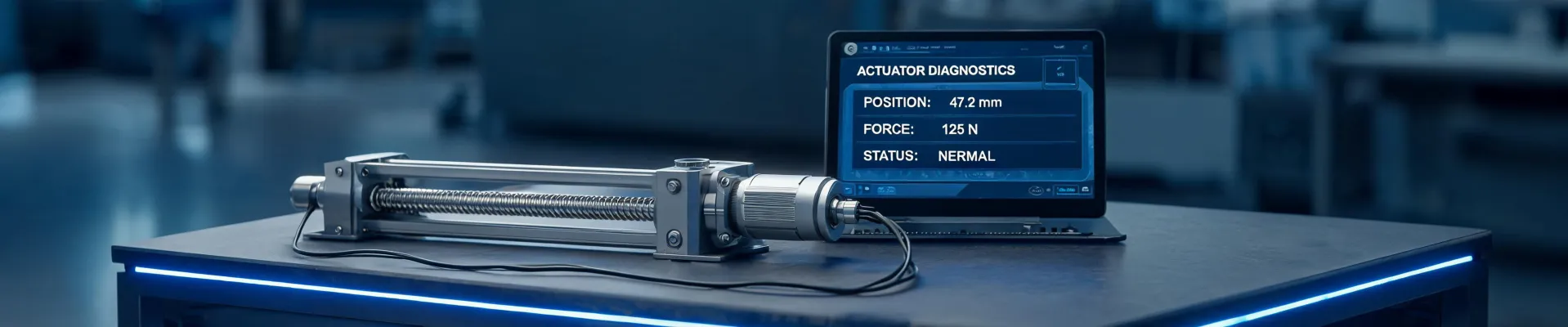
The advent of advanced brushless DC motor control has been a game-changer for linear motion. When we switched to a pre-integrated linear actuator with a built-in BLDC motor and controller from Thomson Linear, we saw three immediate benefits:
- Eliminated integration labor: No more wiring up separate controllers and tuning PID loops. It was plug-and-play.
- Reduced inventory complexity: One part number replaced four. Our inventory carrying costs dropped by 12%.
- Improved reliability: Single-source responsibility. If something went wrong, we had one vendor to call, not three pointing fingers.
The surprise wasn't just the time savings. It was the performance. The closed-loop control offered by modern BLDC drivers gave us precision we previously could only get with expensive servo systems. I calculate that for simple indexing tasks, we saved 25% by moving from a servo setup to a high-performance brushless DC motor control system with an integrated actuator.
Argument 3: Digital Tools Are Killing the RFQ Game
Procurement used to be about getting three quotes to squeeze out a better price. But that process itself is a cost. Spending 6 hours to save $200 on a $2,000 order? That's a negative return on labor if your engineers' time is worth anything.
The Thomson Linear official website is a perfect example of the new, cost-effective reality. Instead of calling a sales rep for a quote on a standard part, engineers can now use online configurators, download CAD models instantly, and order from stock. This doesn't just save time; it eliminates the administrative overhead of purchase orders and invoice processing.
In Q2 2024, when we switched vendors for standard linear bearings, I ran a comparison. Vendor A (traditional, needed a quote) gave us a unit price of $45. Vendor B (online, self-service) was $48. But Vendor A's process required 2 purchase orders, a follow-up call, and a 3-week lead time. Vendor B's was a single online order with 5-day delivery. The internal cost of processing Vendor A's order ate up the price difference. The 'higher' price on the self-service model was actually cheaper overall.
Responding to the Skeptics: 'Why Fix What Isn't Broken?'
I get why some veteran engineers are hesitant to change. 'We've always done it this way,' and 'our current supplier is reliable' are extremely valid points. To be fair, if your current setup meets all your specs for accuracy and lifespan, you have a right to be skeptical.
But consider this: the industry has changed around you. The 'reliable' supplier you've used for 10 years might be using the same technology from 2015. Meanwhile, companies like Thomson Linear are incorporating finite element analysis into ball screw design and optimizing brushless DC motor control for better efficiency. The component you bought at a 'good price' in 2020 might be technologically obsolete in terms of efficiency and lifespan.
Also, think about the next generation of engineers on your team. They prefer researching on a thomson-linear official website with clear specs and downloadable 3D models. They don't want to wait a week for a paper catalog. If your procurement process is a barrier to them doing their jobs, you're creating a hidden cost in talent retention and productivity.
Stop Buying Components. Start Buying Solutions.
My final point is this: the most cost-effective procurement strategy in 2025 is not buying the cheapest part. It's buying the right part with the most value built-in. That means prioritizing integrated systems like Thomson Linear actuators, leveraging modern control technology, and using efficient digital procurement channels.
I'd argue that if you are still separating your motor, bearing, and controller purchases to save a few dollars per unit, you are likely overspending by 10-20% on your total operational cost. Stop thinking in terms of unit price. Start thinking in terms of applied cost. The industry is giving us tools to be way more efficient. Start using them.