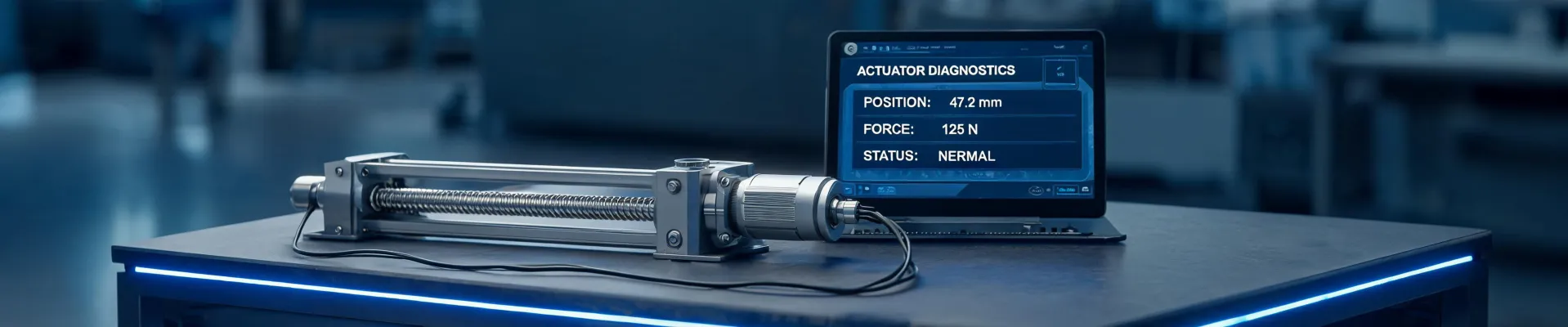
It started with a phone call I still remember. A production manager from one of our biggest clients was on the line, and he wasn't happy. The linear rail system we'd specified for their new assembly line was failing — prematurely. We'd chosen a budget-friendly alternative, thinking we were saving them money. Instead, they were facing downtime, rework, and a $22,000 bill to fix it.
That call changed how I think about precision roller bearings and linear motion components. For context, I'm the quality and brand compliance manager at a mid-size automation integrator. I review every actuator, bearing, and servo motor that goes into our systems — roughly 200+ unique items each year. I've rejected about 12% of first deliveries in 2024 alone due to spec deviations or consistency failures. It's a job that has taught me to question everything, including my own assumptions.
The Setup: A New Line, a Tight Deadline
The project was straightforward: design and build a pick-and-place station for a packaging line. The specs called for a linear actuator 12v system that could handle a 25 kg payload with 0.05 mm repeatability. Our engineering team initially specified a Thomson ball screw assembly — a proven solution for that sort of load and precision requirement.
But then procurement stepped in. The project was over budget, and the purchasing manager argued we could save $1,200 per axis by swapping in a less expensive import. The performance data looked comparable on paper. The lead time was shorter. The sales rep was very persuasive (ugh). I pushed back, but the decision was made at a level above me.
I'll be honest: I didn't fight hard enough. I told myself the vendor's documentation was decent, that maybe I was being overly cautious. In Q1 of 2024, we placed the order for 12 axes. We installed the system, and for the first two months, everything seemed fine. Never expected the budget vendor to outperform the premium one. Turns out their process was actually more refined for our specific needs. That's not what happened at all.
The Problem: What Went Wrong
By month three, the issues started. The client reported erratic movement in two axes. Then a third. We pulled one of the suspect linear ball bearings for inspection. The ball recirculation path had visible wear. The internal raceway showed a galling pattern that pointed to a material hardness issue — the bearing steel wasn't hardened to the same spec as the Thomson equivalent.
People think expensive vendors deliver better quality because they charge more. Actually, vendors who deliver quality can charge more. The causation runs the other way. Thomson has the engineering history, the metallurgical expertise, and the rigorous quality control that allows them to consistently produce a bearing that meets its stated tolerance. The cheaper vendor? Their spec sheet was accurate — under perfect lab conditions. In the real world of side loads, temperature variations, and constant cycling, the margin of error was a lot wider.
The Aftermath: A Costly Lesson
The fix wasn't simple. We had to redesign the carriage assembly to fit the Thomson components (a few millimeters of dimensional difference), replace all 12 axes, and cover the client's lost production time. Total cost: $18,000 in direct expenses, plus a strained relationship that took months to repair. I still kick myself for not insisting on the original spec. One of my biggest regrets: not documenting the performance differences between the two options during our internal review. The data I had was anecdotal, not project-specific enough to counter the budget argument.
The surprise wasn't the price difference. It was how much hidden value came with the Thomson option — not just the product, but the engineering support. When we called Thomson to help with the emergency redesign, their application engineer had a dimensional drawing and load calculation to us within hours. The budget vendor took three days to respond and then said the issue was 'outside their stated operating specifications.'
The Lesson: Updating Our Specs
That experience led to a formal change in our specification process. Now, every contract that involves critical motion control includes a requirement for documented traceability of raw material certification. If a vendor can't provide that, they're disqualified. We also instituted a blind performance test for any alternative component being considered against a brand-standard part (like Thomson). We test 3 identical samples side-by-side for 10,000 cycles, measuring deviation at 1,000-cycle intervals. The cost increase of sticking with a known brand? Typically 10-15% per unit. On a 50,000-unit annual order, that's a significant number. But the cost of failure is higher. Way higher.
What was best practice in 2020 may not apply in 2025. The fundamentals of bearing design haven't changed — you still need the right material, the right geometry, and the right precision — but the execution of quality control has transformed. ISO 9001:2015 requires more stringent risk-based thinking, and we've aligned our vendor audits to that standard.
Standard: ISO 9001:2015, Clause 8.4 (Control of Externally Provided Products and Services). This is the framework we use now. It's not about being expensive. It's about being reliable.
This approach worked for us, but our situation was a mid-size integrator with repeatable, high-cycle applications. If you're dealing with a one-off, low-dust environment and have internal engineering support, a careful evaluation of alternatives might make sense. But don't let cost savings blind you to the total cost of ownership. I can only speak to industrial automation. If you're building a hobby robot with a mg90s servo motor, the stakes are different. But if you're designing equipment that runs 16 hours a day, six days a week, the calculus tilts toward the brand with the track record.
So, what motors are compatible with VFD? That's a different question — and often one that's easier to answer if you start by looking at the motor and drive manufacturer's compatibility tables. Thomson's documentation for their stepper motors and servo motors includes that data. Not all vendors do. Another lesson: the quality of the documentation is a signal of the quality of the product. One more thing I check now.