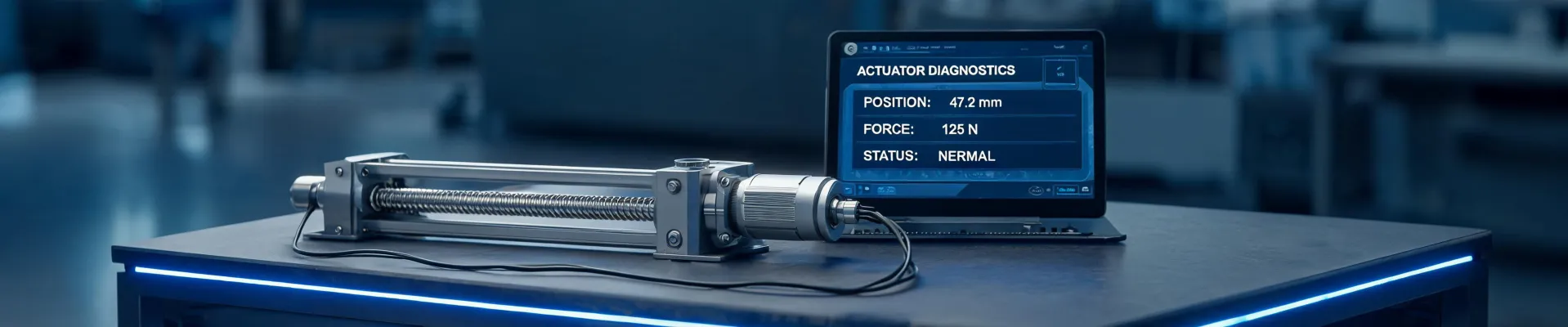
It was 10:47 on a Tuesday night when a plant manager called me. One of his production lines was down. The culprit: a linear actuator that had burned out after 14 months of continuous duty. He had a customer delivery in 48 hours, and the replacement he needed had a six-week lead time. His voice said panic even if his words didn't. In my role as the person who gets called when everything else has failed, I've learned to listen for that.
He asked if I could find a unit by Thursday.
I've spent a decade responding to emergencies like this. In the last two years alone, I've coordinated over 200 rush orders for actuators, drives, and motors. But here's the thing I wish every engineer and buyer understood: by the time the phone rings, the real damage was already done.
It Never Starts as a Supply Chain Problem
When people call me, they usually think they have a procurement problem. 'Our supplier doesn't stock it.' 'The lead time is too long.' 'We need to find a faster distributor.' They want me to pull strings, find inventory somewhere, and get a truck moving.
Sometimes I can. Good distributors keep inventory and can cross-reference a dozen different manufacturers quickly. But solving the immediate shortage doesn't fix the underlying issue, and it's the underlying issue that put that machine down in the first place.
The Real Problem Is Usually Below the Surface
Look at the root cause pattern in most emergency replacement requests: cost-driven selection and protocol lock-in. Let me give you an example. Not long ago, a client got a quote for an industrial linear actuator. They decided it was too expensive and swapped in a much cheaper alternative—a hobby-grade SG90 servo motor rigged up to drive a load that should have been handled by a proper actuator. Yes, the SG90 is fine in RC planes and maybe a 3D printer. It is not designed for a 16-hour shift, with dust, vibration, and no maintenance windows. It failed after three weeks. They saved maybe $300. They spent $3,000 on an emergency replacement and two days of downtime. I still kick myself for not insisting on a full motion system review before that decision.
But that's an extreme example. Here's the subtler one. Many industrial buyers buy a motor from one vendor, a gearbox from another, and a drive from a third, without thinking about how they communicate. Then one component fails, and none of the others can be replaced independently because everything is tied to a proprietary protocol. This is especially painful with actuators. If you buy an actuator with a closed communication protocol, you've created a single point of failure. No one else can step in quickly because their products don't speak that language.
The Hidden Cause: Protocol Lock-In
Here's the part most people don't see coming. The communication standard is not just a technical detail; it's your emergency plan. The CANopen CiA 402 standard is an open device profile for drives and motion control. A thomson linear actuator with CANopen CiA 402 can be matched with drives, PLCs, and replacement parts from multiple vendors. When something breaks, a knowledgeable distributor can cross-reference and get you a working solution in hours, not months. That's the power of standardization.
The industry has shifted, and what was best practice in 2020 may not apply in 2025. The fundamentals haven't changed—you still need the right force, stroke, and duty cycle—but the execution has transformed. Old way: buy a part. New way: design a system. If you're still selecting actuators the way we did five years ago, you're probably creating tomorrow's emergency.
And once a niche supplier disappears, it gets worse. If you don't believe me, look up the search query 'what happened to Pete Jackson gear drives.' It comes up for a reason. A specialized supplier fades away, and suddenly a generation of installed equipment is orphaned. The same thing can happen in linear motion if you stake your whole production line on a proprietary connection.
What That Costs You
Let's put a number on it. A decent industrial actuator might cost $1,500. An emergency replacement from a distributor often carries a 50-100% premium—say $2,250 to $3,000. Add overnight freight ($300-500), after-hours labor ($500-1,000), and the cost of verifying the replacement once it arrives. You're at $4,000 to $5,000 before the machine turns back on. And that's in the best case, where the replacement works the first time.
If it doesn't work, you're in a different world. One automotive client I worked with estimated a single hour of downtime at $120,000. Another client missed a shipping window and triggered a $50,000 penalty clause. I've seen companies lose contracts over a single failed actuator, not because the part was expensive but because the downtime was catastrophic.
To be fair, no component lasts forever. But most of these failures happened earlier than they should have—because of the way the system was selected. Here's the frustrating part: in almost every one of these cases, the client initially saved money. A $700 actuator that should have been $1,200. A $400 'economical' motor. A $200 lower-priced brake. The savings were real, but the consequence was a huge cost multiplier. The cheapest option looks smart until it's not.
What Actually Works
So how do you get ahead of the emergency? You build the solution into your specification process before failure happens.
- Work with a real thomson linear actuator distributor. Not just an online catalog. A qualified distributor has engineers who can cross-reference part numbers, verify compatibility, and often hold regional stock. They'll tell you if something is obsolete before it fails.
- Specify open standards like CANopen CiA 402. It gives you multiple sourcing options and makes emergency replacements far easier.
- Choose brushless motors where the duty cycle justifies it. Brushless motors run cooler, last longer, and have fewer wear parts than traditional DC or stepper motors. For a lot of modern industrial applications, they're the rational default, not a premium upgrade.
- Keep critical spares. If one failure can stop production, you need a spare. That's not waste; it's insurance. Our company adopted a formal critical-spares policy in 2023, after a $50,000 contract slipped away because we tried to save money on a backup actuator.
I'm not saying you need to stock a warehouse. But one spare actuator, one spare drive, one spare motor for each critical line is enough to keep production alive while the real replacement ships.
In 2025, buying a linear actuator is a system decision, not a commodity purchase. The best emergency plan isn't a faster distributor—it's a design that already anticipates failure. When I'm triaging a rush order, the people who get through it are the ones who already built that redundancy into their system. The ones who don't are the ones I see again the next time something breaks.